
Etobicoke Shoreline Homes: Managing High Water Tables and Foundation Erosion
TLDR: Etobicoke shoreline homes near Lake Ontario and Etobicoke Creek face elevated risks of basement leaks, foundation cracks, erosion, and sump pump failure due to shallow water tables, saturated soil, hydrostatic pressure, and shoreline movement. Canada Waterproofers helps GTA homeowners manage these risks with exterior waterproofing, foundation crack repair, weeping tile replacement, sump pump installation, battery backup systems, and basement flood prevention solutions. For homes in areas like Mimico, Long Branch, and South Etobicoke, early inspection and proper waterproofing are critical to protecting the foundation, basement, and long-term property value.
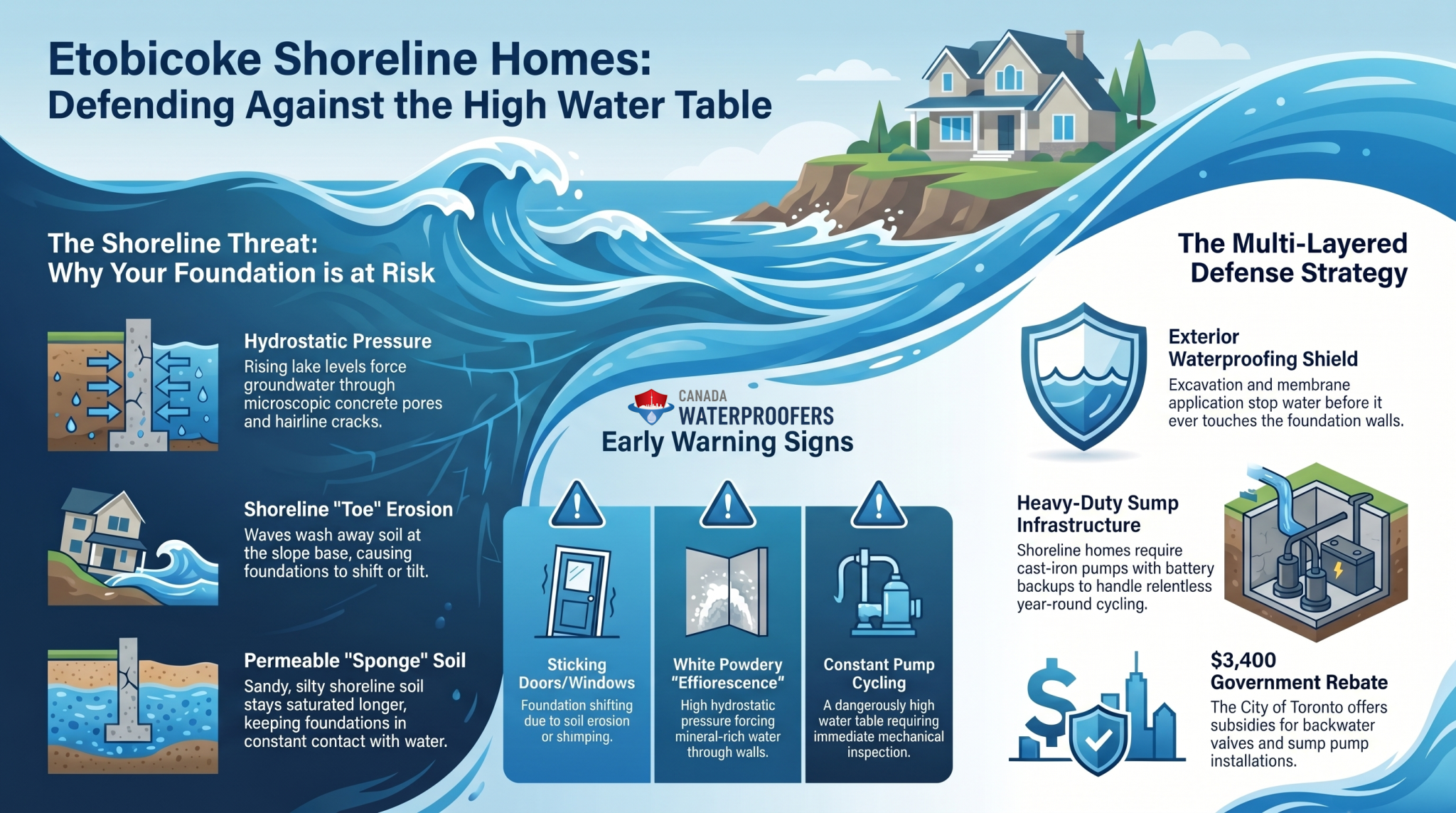
Living along the Etobicoke shoreline or near the Etobicoke Creek corridor offers some of the most stunning views in the Greater Toronto Area. But if you own one of these properties, you know that the beauty of Lake Ontario comes with a significant trade-off: a constant battle against water.
Between the rising lake levels and a naturally shallow water table, homeowners in South Etobicoke: from Mimico to Long Branch: face structural challenges that most inland residents never have to think about. At Canada Waterproofers, we’ve seen how the combination of high hydrostatic pressure and shoreline erosion can turn a small damp spot into a full-scale foundation failure.
If you’re noticing cracks in your basement or a sump pump that never seems to stop running, you aren't just dealing with a "wet basement." You’re managing a complex geological environment. Here is how you can protect your investment.
The "Invisible Enemy": Understanding the High Water Table
In many parts of the GTA, the water table: the level at which the ground is saturated with water: is deep underground. However, along the Etobicoke shoreline, that water table is often just a few feet below the surface.
When it rains, or when Lake Ontario levels rise, that water has nowhere to go. It sits against your foundation walls, creating massive amounts of hydrostatic pressure. This pressure is the primary driver of leaky basement repair needs in the area. Water isn't just "falling" into your basement; it’s being forced through the microscopic pores of your concrete and any hairline cracks in the structure.
Why Etobicoke is Different
Unlike the heavy clay found in North York, the soil near the Etobicoke shoreline is often a mix of sand, silt, and urban fill. This soil can be highly permeable, meaning water moves through it quickly. While this sounds like it would drain well, the proximity to the lake means the ground stays saturated longer. For homeowners, this means your foundation is essentially sitting in a giant, heavy sponge.
Shoreline Erosion: When the Land Literally Walks Away
Erosion isn't just something that happens to the bluffs in Scarborough. Along the Etobicoke Creek and the lakefront, "toe erosion": where waves or high creek flows wash away the soil at the base of a slope: is a constant threat.
When the soil at the base of a slope is removed, the land above it (where your house sits) becomes unstable. This leads to "slumping," which can cause your foundation to shift, tilt, or crack. If your home is situated on a steep bank or near the water’s edge, managing basement flood prevention isn't just about keeping the floor dry; it’s about ensuring the ground stays under your feet.

Protecting the Perimeter: Why Exterior Waterproofing is Non-Negotiable
For shoreline homes, we almost always recommend exterior waterproofing in Toronto. While interior systems are excellent for managing water that has already entered, an exterior approach stops the water from ever touching your foundation.
Given the high water table in Etobicoke, an exterior solution provides the most robust defense. This process involves:
- Excavation: Digging down to the footing of your home to expose the foundation wall.
- Cleaning and Repair: Sealing any existing cracks that have been caused by hydrostatic pressure.
- Membrane Application: Applying a high-grade waterproof membrane (like DELTA-MS) that acts as an impermeable barrier.
- Weeping Tile Replacement: Installing new drainage pipes to ensure groundwater is channeled away from the house before it can build up pressure.

By taking this "shield" approach, you significantly reduce the risk of structural erosion and long-term decay of your foundation walls.
Mechanical Defense: Sump Pumps and Backup Systems
In a high-water-table environment like Etobicoke, your sump pump is the heart of your home’s defense. In these neighborhoods, a sump pump isn't just a "nice-to-have" backup; it’s a piece of critical infrastructure that often runs year-round.
The Problem with "Standard" Pumps
Many new-build homes in the Etobicoke area come with "contractor-grade" sump pumps. These are fine for occasional use, but they often fail when faced with the relentless groundwater levels of a shoreline property. We recommend a heavy-duty, cast-iron pump designed for high-cycle use.
Why Battery Backups are Essential
Shoreline storms often lead to power outages. If your power goes out during a heavy rain and your sump pump stops, your basement could flood in a matter of minutes. At Canada Waterproofers, we specialize in professional sump pump installation with battery backup systems ($1,600-$4,000) that ensure your home stays dry even when the grid goes dark.

Navigating the TRCA and Regulatory Hurdles
If you are planning significant foundation work or shoreline protection in Etobicoke, you need to be aware of the Toronto and Region Conservation Authority (TRCA). Because much of the shoreline is considered a protected zone, any work that involves altering the slope or moving large amounts of earth may require a permit.
Don't let the paperwork scare you off. Ignoring a foundation issue because you're worried about permits will only lead to more expensive repairs: and potential fines: later. Working with a licensed and insured specialist who understands the Ontario Building Code is the best way to ensure your project is compliant and effective.
Expert Insights: Warning Signs for Shoreline Homeowners
If you live within 1km of the lake or a major creek, keep an eye out for these red flags:
- Sticking Doors and Windows: This is often the first sign that your foundation is shifting due to soil erosion or slumping.
- Efflorescence: That white, powdery substance on your basement walls is actually salt left behind by evaporating water. It’s a clear sign that hydrostatic pressure is forcing moisture through your walls.
- New Cracks in the Yard: Large cracks in your soil or a "dropping" of your patio stones can indicate that the earth is shifting toward the water.
- Constant Sump Pump Activity: If your pump is cycling every few minutes even on a sunny day, your water table is dangerously high.
Summary: Invest in Protection Before the Storm
The cost of exterior waterproofing or a high-end sump pump system might seem significant upfront ($2,000-$50,000 depending on the scope), but compared to the cost of a foundation collapse or a catastrophic flood, it is a drop in the bucket. In the GTA real estate market, a dry, stable basement is one of the single best ways to protect your property value.
At Canada Waterproofers, we’ve been protecting GTA homes since 1998. We offer a lifetime transferable warranty on all exterior waterproofing systems, providing peace of mind for you and any future buyers of your home.
Don’t wait for the next Great Lakes storm. Contact Canada Waterproofers today for a professional inspection and a custom protection plan for your shoreline home.
FAQ: Etobicoke Shoreline Waterproofing
1. Does the City of Toronto offer rebates for Etobicoke homeowners?
Yes! Through the Basement Flooding Protection Subsidy Program, Toronto residents (including those in Etobicoke) can receive up to $3,400 for the installation of a backwater valve and a sump pump. This is a massive help for managing the costs of basement flood prevention.
2. Can I waterproof my basement from the inside if I live near the water?
While interior waterproofing is possible and effective for many homes, it doesn't stop the soil from eroding outside. If your foundation is already showing signs of structural stress from the high water table, exterior waterproofing is usually the better long-term investment.
3. How often should I check my sump pump?
For shoreline homes, we recommend a monthly check. Pour enough water into the pit to trigger the pump and ensure it discharges properly. You should also check the battery backup every six months.
4. What is a French drain and do I need one?
A French drain is a gravel-filled trench with a perforated pipe that redirects surface and groundwater away from your foundation. For Etobicoke homes with large yards, a French drain is an excellent way to reduce the amount of water reaching your foundation walls.