
What Causes Basement Floor Leaks During Heavy Rainfall
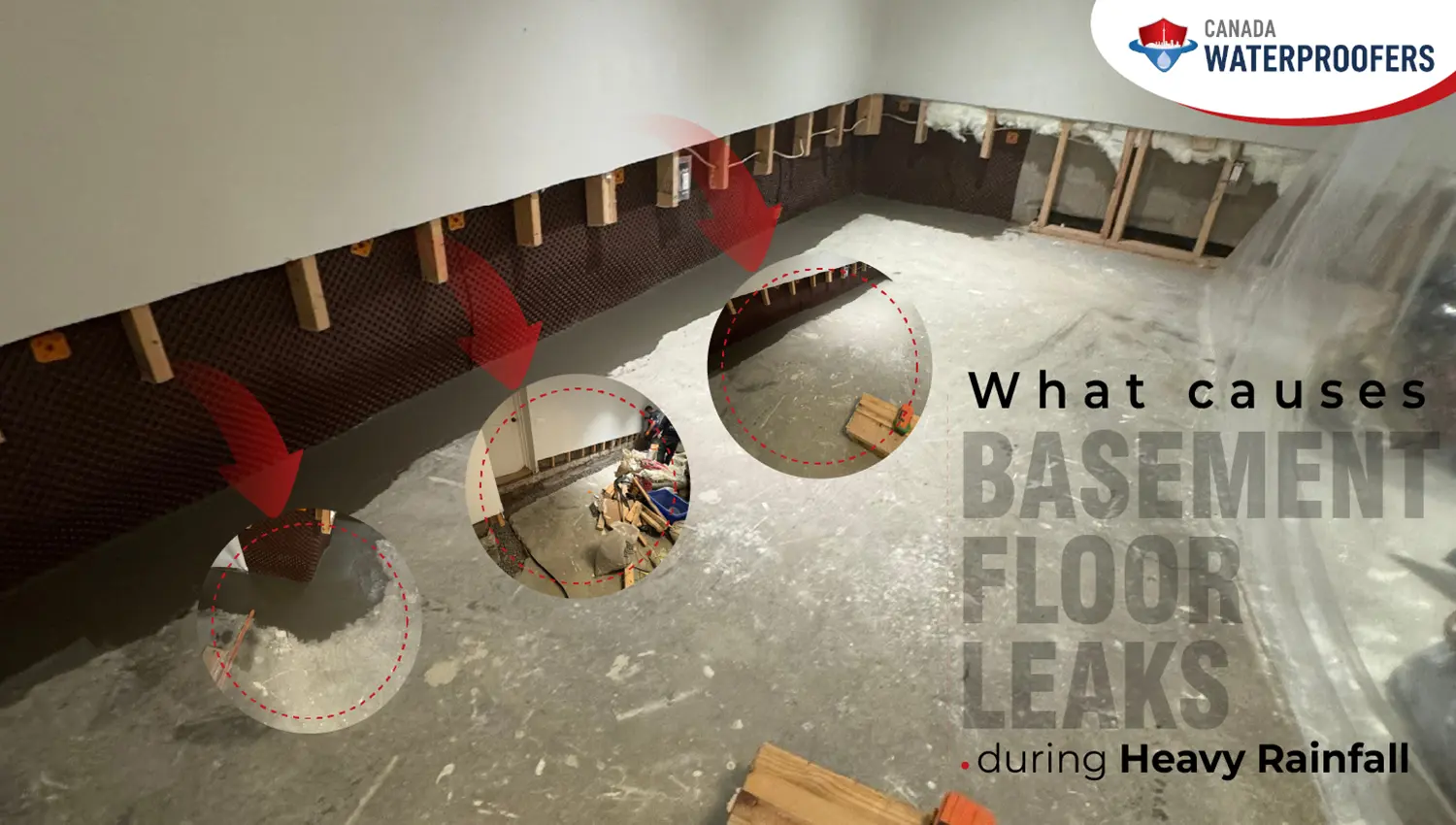
You walk downstairs after a night of heavy rain and notice water spreading across your basement floor. Maybe it is a small puddle near the wall. Maybe the carpet feels wet, or water is coming through a crack you have never noticed before.
It is frustrating, especially when the basement was completely dry the day before.
Most basement floor leaks do not happen overnight. Water may have been collecting around your foundation for months. Heavy rainfall simply makes the problem noticeable. The trouble could come from poor yard drainage, cracks in the concrete, or an old waterproofing system that no longer keeps water out.
What Causes Basement Floor Leaks During Heavy Rainfall? 7 Common Problems Homeowners Should Know
Rainwater needs somewhere to go. When the ground becomes too wet to absorb more water, it collects around your home's foundation. From there, it looks for openings in the concrete.
Here are seven reasons your basement floor might start leaking after a storm.
1. Water Pressure Builds Under the Concrete Floor
Think about what happens when you pour water into a bucket of soil. Eventually, the soil becomes soaked and cannot absorb any more.
Something similar happens around your house during heavy rainfall.
Water builds up beneath the surface and puts pressure on your basement walls and floor. This is known as hydrostatic pressure .
If the concrete is cracked or has gaps that allow water to get through. You may notice puddles forming where the floor meets the wall.
2. Small Foundation Cracks Allow Water Inside
Not every foundation crack causes a leak. However, even a narrow opening can let groundwater enter when the pressure outside increases.
Some cracks develop as concrete cures. Others appear because the soil underneath the house settles or moves.
Look for damp lines, white powdery marks, or water appearing along existing cracks.
Water will seep through these openings but Foundation Crack Repair will prevent that. However, the repair method depends on the crack’s condition and location.
3. Rainwater Collects Near Your Foundation
Take a walk around your house after the rain stops.
Do you see puddles beside the walls? Are your downspouts releasing water directly onto the ground near the foundation?
These are problems worth checking.
Your yard should direct rainwater away from the house. If the ground slopes inward, water can collect beside the basement walls and eventually find its way inside.
Sometimes, fixing the slope or extending downspouts makes a noticeable difference.
4. Old Drainage Pipes Stop Working Properly
Many homes have drainage pipes installed around the foundation. These pipes collect underground water and carry it away.
But pipes can become blocked with soil, roots, or debris. Some may crack or collapse as they age.
When that happens, rainwater stays around the foundation longer than it should.
An Interior Waterproofing system may help manage water entering around the basement perimeter. A contractor can inspect the existing drainage setup before recommending repairs.
5. Your Sump Pump Cannot Handle the Rain
A working sump pump can help keep groundwater from collecting beneath your basement.
In heavy rain, however, the pump may run continuously. If it stops working, loses power, or cannot remove water quickly enough, the sump pit may overflow.
You might hear unusual noises or notice the pump switching on and off repeatedly.
There are situations where you need to install or replace a sump pump. A backup pump or battery backup may also help during power failures.
6. Exterior Waterproofing Has Worn Out
Your foundation may have waterproofing materials installed along its outside walls.
These materials can deteriorate over time. Older homes may also have limited protection against groundwater.
Once that protection fails, water can reach foundation cracks and construction joints.
This may involve digging out, fixing damaged areas and applying suitable waterproofing materials. Exterior waterproofing Contractors may also repair or replace drainage pipes where necessary.
7. Water Enters Through the Floor and Wall Joint
There is a joint where your basement floor meets the foundation wall.
This narrow space is an opening that may, especially if the drainage around the footing is not good, allow groundwater to enter during a heavy storm.
Water may appear as a thin wet line along the wall before spreading across the floor.
Homeowners sometimes mistake this for a plumbing leak. Checking when the water appears can help identify its source.
What Should You Do When Your Basement Floor Starts Leaking?
Finding water downstairs is stressful, but rushing into repairs can waste money.
Start with a few checks:
- Look for the entry point: Check floor cracks, wall joints, and the sump pit.
- Check outside: See whether gutters overflow or water collects near the foundation.
- Move stored belongings: Keep cardboard boxes, furniture, and electrical items away from wet areas.
- Take photographs: Record where the water appears and how much has entered.
- Get the source checked: Recurring leaks may need professional Basement Leak Repair.
Never enter standing water if electrical equipment could be submerged or energized.
Get Help Before the Next Heavy Rainfall
A basement that leaks during one storm may leak again when similar conditions return. Finding out where the water comes from is more useful than repeatedly drying the floor.
Canada Waterproofers offers basement waterproofing and leak repair services for homeowners dealing with groundwater problems. Having the foundation and drainage checked can help you understand which repairs your property actually needs.
Frequently Asked Questions
1. Why does my basement floor leak only when it rains?
Heavy rain raises groundwater levels, allowing water to enter through cracks, joints, or drainage problems.
2. Can water come through a concrete basement floor?
Yes. Groundwater can enter through cracks and openings when pressure builds beneath the floor.
3. Will a sump pump stop basement floor leaks?
It can help control groundwater, but cracks and drainage problems may still need repairs.
4. How do I find where basement water is coming from?
Check floor cracks, wall joints, drainage pipes, and the sump pit, especially after rainfall.
5. Should I repair a small basement leak?
Yes. Even a small recurring leak can damage flooring, stored belongings, and finished basement materials.