
What Is the Best Way to Repair a Cracked Foundation Wall
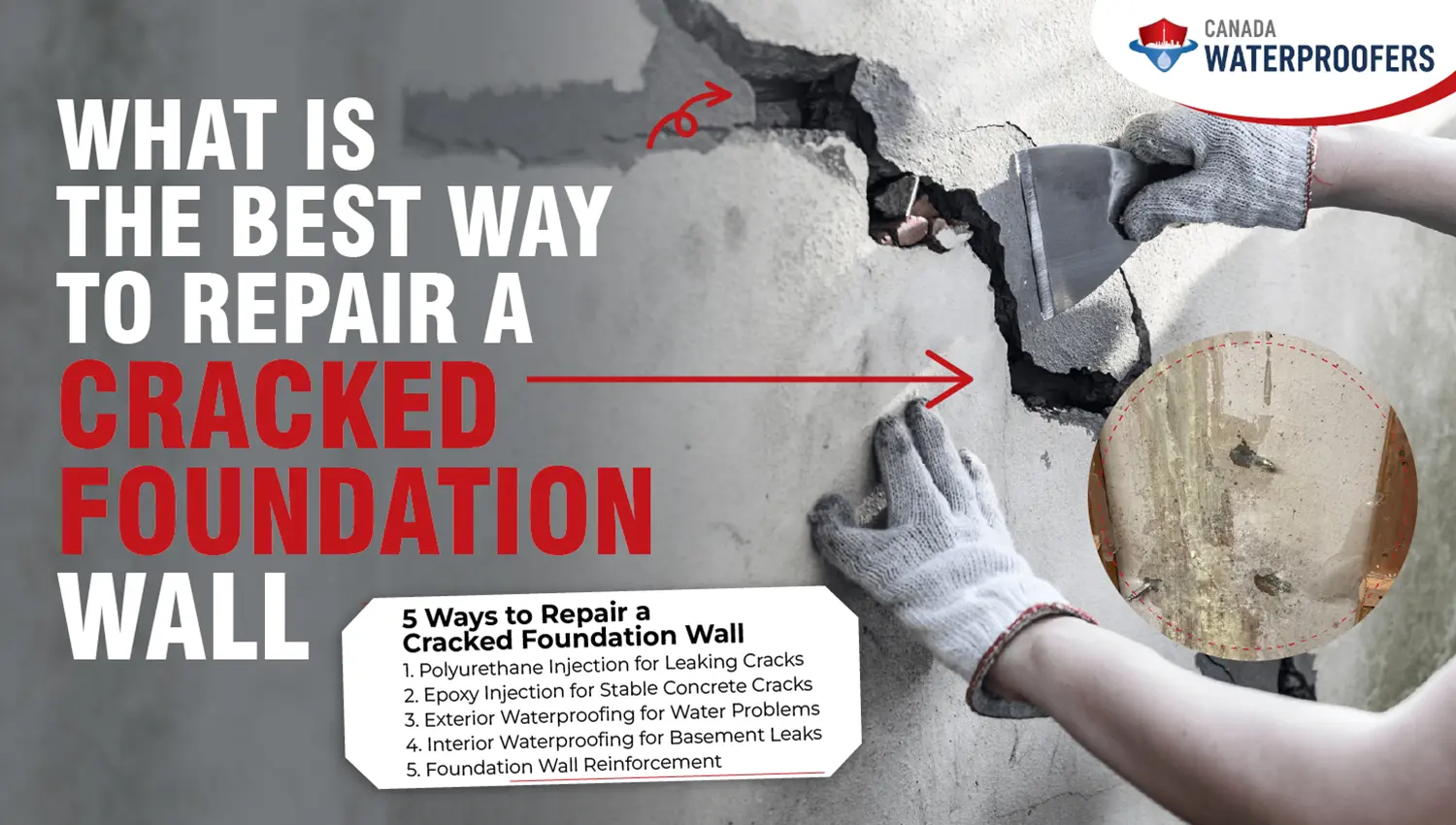
A crack in your basement wall is easy to ignore when it's small. You might see a thin line running down the concrete and think nothing of it. Then comes a heavy rainstorm, and suddenly there's water on the basement floor. That's when most homeowners realize the crack needs attention.
Foundation cracks are common in Canadian homes. Cold winters, moving soil, poor drainage and groundwater pressure can all contribute to the problem. Some cracks need to be sealed while others indicate damage that requires structural repairs.
If you're wondering what is the best way to repair a cracked foundation wall, the first thing to understand is that every crack needs a different approach. A repair that works for a narrow vertical crack may do little for a wall that's starting to bow inward.
What Is the Best Way to Repair a Cracked Foundation Wall Without Repeated Leaks?
The best repair depends on what's causing the crack and whether the wall is still stable. Contractors commonly use polyurethane injection, epoxy injection, or exterior foundation crack repair.
For a leaking crack in a structurally sound poured concrete wall, polyurethane injection is often a practical choice. It seals the path where water enters. Epoxy injection may work better when a stable crack needs structural bonding.
However, neither method can stop a foundation that's still moving. If the wall has shifted, bowed, or developed wide horizontal cracks, a structural engineer should inspect it before repairs begin.
What Causes Cracks in Basement Foundation Walls?
Concrete is strong, but the ground around a house doesn't always stay in place. Several things can put pressure on basement walls.
- Soil movement: Ground beneath the house can settle unevenly and place stress on the foundation.
- Water pressure: Rainwater and melting snow can collect around basement walls, especially when drainage is poor.
- Freezing temperatures: Water in the surrounding soil freezes and expands, increasing pressure against the concrete.
- Concrete shrinkage: Fresh concrete can develop small cracks as it cures.
- Poor grading: When the ground slopes toward the house, rainwater collects near the foundation instead of flowing away.
It is important to find the cause, because if you seal up one crack without fixing the underlying problem, another will just form.
5 Ways to Repair a Cracked Foundation Wall
1. Polyurethane Injection for Leaking Cracks
Polyurethane injection is commonly used for basement leak repair in poured concrete walls.
A contractor drills injection ports along the crack and fills the crack with a suitable polyurethane resin. The material reacts or expands, depending on the product, to help seal the opening.
This repair will stop water from coming in through a non-structural crack without the need to dig around the house. But it will not reinforce a damaged foundation wall.
2. Epoxy Injection for Stable Concrete Cracks
Epoxy injection works differently. Rather than simply blocking water, epoxy bonds the cracked concrete together.
If the crack is stable and structural bonding is required, contractors may recommend it. The concrete's condition and moisture level affect whether epoxy will work properly.
If the foundation continues moving, epoxy alone won't solve the problem.
3. Exterior Waterproofing for Water Problems
Sometimes, water enters through more than one crack. The outside foundation wall may have damaged waterproofing, poor drainage, or several leaking areas.
External waterproofing requires excavation next to the wall, repairing any damaged concrete, and applying a waterproof membrane.
A contractor may also install drainage materials to help direct groundwater away from the foundation.
This method can treat the water entry at its source but generally involves more labor and excavation than interior crack injection.
4. Interior Waterproofing for Basement Leaks
When digging outside isn't possible, interior waterproofing can help control water entering the basement.
The contractors can install drainage channels along the basement floor that can be tied into a sump pump. The system collects water and moves it away.
This doesn't repair a cracked structural wall, but it can help keep the basement dry.
5. Foundation Wall Reinforcement
Horizontal cracks, bowing walls, and displaced concrete need closer attention. These signs can mean the soil is pushing too hard against the foundation.
A structural engineer may recommend wall reinforcement, anchors, or other structural repairs.
Don't cover these cracks with ordinary filler. The wall needs a proper assessment first.
How to Know if a Foundation Crack Is Serious
Check your basement walls for these warning signs:
- Cracks that become wider or longer.
- Water stains around concrete cracks.
- Horizontal cracks or stair-step cracking.
- Basement walls bending inward.
- New gaps around doors or windows.
If you notice these problems, arrange an inspection before the damage gets worse.
How to Stop Foundation Cracks From Coming Back
Even after foundation crack repair, poor drainage can cause further trouble.
Clean your gutters, keep downspouts directed away from the house, and check that the ground slopes away from the foundation.
If the groundwater keeps coming back, you can have a sump pump installed to take the water out. A contractor can also check whether additional drainage is necessary.
Get Help With Cracked Basement Walls
A small crack doesn't always mean expensive repairs, but ignoring a leaking or widening crack can lead to more damage. Have the wall inspected before choosing a repair method.
Canada Waterproofers provides foundation crack repair and basement waterproofing services. Contact the team to discuss your basement problem and find out which repair method may work for your home.
Frequently Asked Questions
1. What is the best way to seal a foundation crack?
Polyurethane injection is commonly used to seal leaking cracks in structurally sound poured concrete walls.
2. Can foundation cracks be repaired from inside?
Yes. Contractors can repair many concrete cracks from inside using polyurethane or suitable epoxy injection.
3. Are horizontal foundation cracks dangerous?
They can indicate serious soil pressure or structural movement. Have a structural engineer inspect them.
4. How much does foundation crack repair cost in Canada?
Costs depend on crack size, accessibility, repair method, and structural damage. Get an inspection for an accurate quote.
5. Will waterproofing stop foundation cracks?
Waterproofing helps control water entry, but it cannot stop cracks caused by ongoing structural movement.